Project Guide
Deck Addition Cost Guide 2026
Updated January 2026
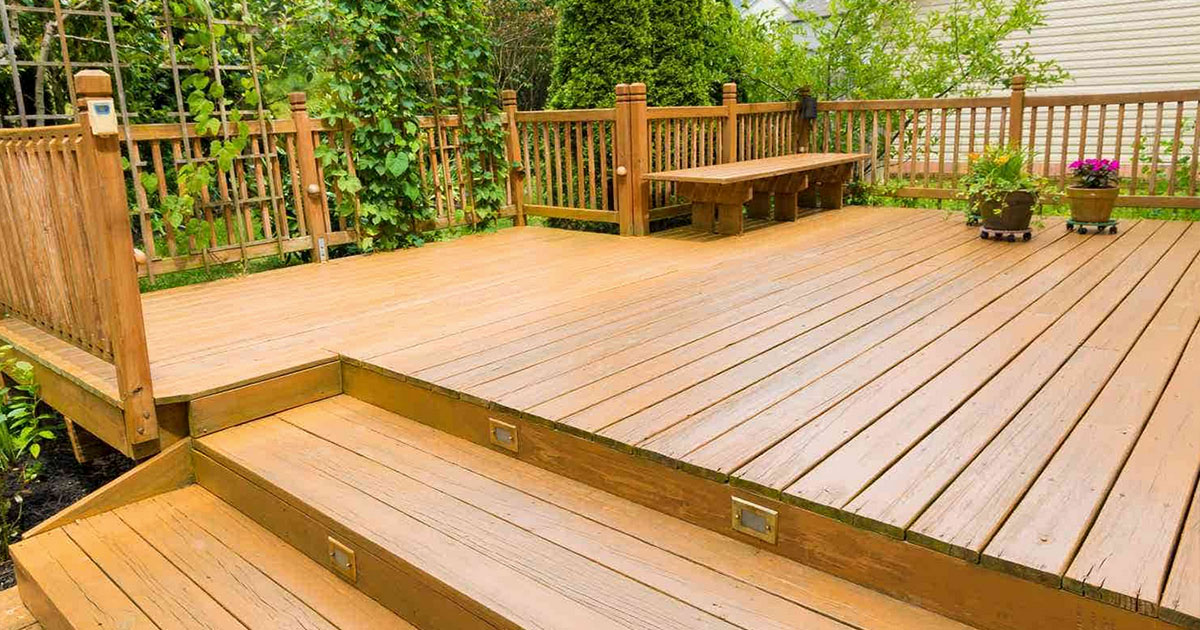
Deck additions are one of the few home improvement projects that homeowners consistently enjoy while they own the home and recoup a meaningful chunk of at resale. The challenge is that cost estimates vary wildly because deck projects range from a simple ground-level platform to a multi-level structure with built-in seating, pergola, and outdoor kitchen rough-in.
A 300 to 400 sq ft deck in pressure-treated lumber runs $15,000 to $22,000 installed nationally. The same size in composite decking runs $22,000 to $35,000. Those numbers go up significantly for second-story decks, irregular shapes, or any structural complexity.
Wood vs. composite
| Material | Installed cost (400 sq ft) | Lifespan | Annual maintenance |
|---|---|---|---|
| Pressure-treated lumber | $15,000 – $22,000 | 15–25 years | Sand + stain every 2–3 years |
| Cedar or redwood | $20,000 – $30,000 | 20–30 years | Stain every 2–4 years |
| Composite (Trex, TimberTech) | $22,000 – $35,000 | 25–30 years | Wash annually, minimal upkeep |
| PVC decking | $25,000 – $40,000 | 30+ years | Wash only, no staining |
The framing and structural elements are almost always pressure-treated lumber regardless of what you choose for the decking surface. The cost difference between wood and composite is primarily in the decking boards themselves and the labor to install them.
What drives the cost
Height is the biggest variable beyond material. Ground-level decks need minimal footings. Elevated decks (over 30 inches off the ground) require engineered footings, ledger bolt connections to the house, and in many jurisdictions a structural engineering sign-off. A second-story deck can cost twice as much as a ground-level one of the same square footage.
Shape adds labor. A simple rectangle is the fastest to build. L-shaped decks, curved edges, and integrated steps all add time and material waste.
Permits and code
Most decks over 200 sq ft or more than 30 inches off the ground require a permit. This is not optional, and an unpermitted deck is a problem at resale. Inspectors flag it and buyers ask for a correction. The permit process also protects you: it ensures footings are properly sized for your local frost depth and load requirements.
Maintenance reality
Pressure-treated wood decks need attention every two to three years: cleaning, sanding, and re-staining or sealing. Skip it for too long and you're accelerating rot at the posts and ledger connection points, which are the most expensive repairs. Composite and PVC largely eliminate this, which is why they've taken over the market in high-humidity climates.
ROI at resale
Deck additions return about 65% nationally, which is solid for an outdoor addition. The return is best in markets where outdoor living matters year-round (coastal California, the Southeast, the Pacific Northwest). In the Upper Midwest where decks sit unused for five months, the return is lower because buyers discount for the short season.
Ready to compare prices?
See what a deck addition costs in your ZIP code, adjusted for local labor rates.
Get my local estimate