Cost to Build a Deck in 2026: Prices by Size and Material

- Jul 4, 2026
- 10 min read
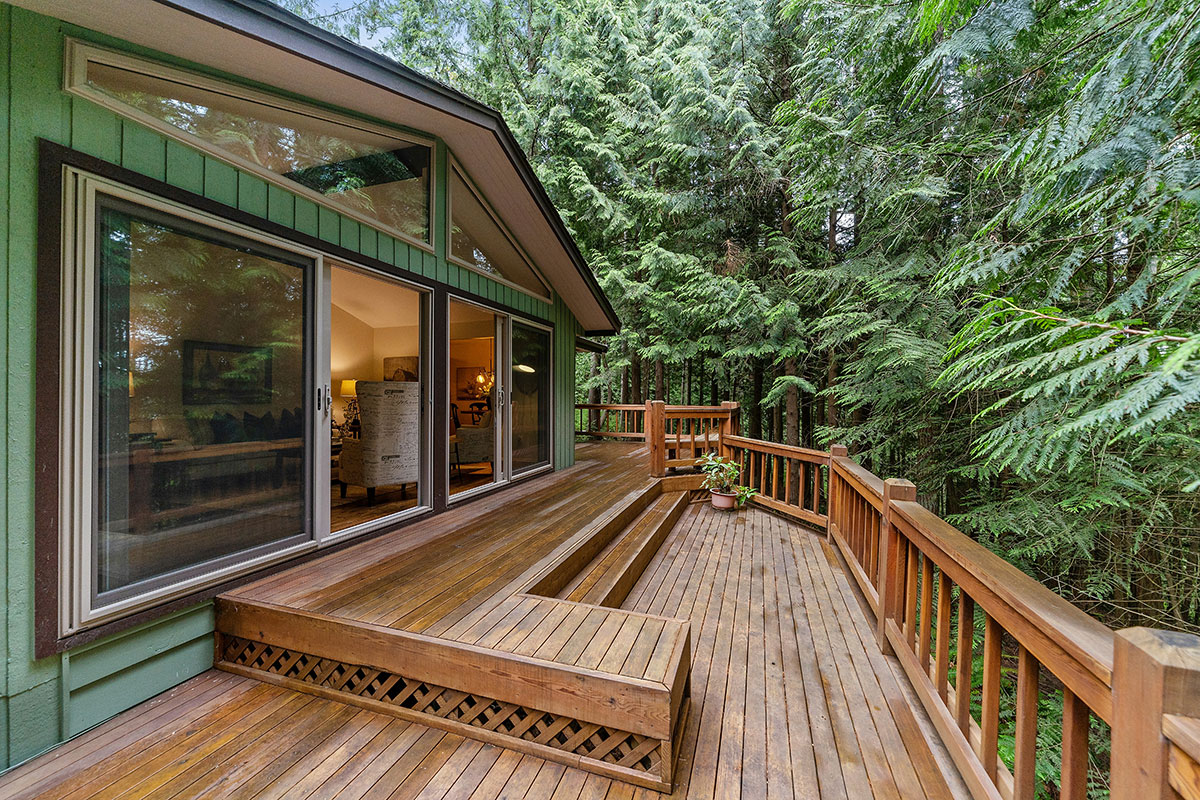
The cost to build a deck runs $25 to $60 per square foot installed in 2026, which puts most projects between $4,500 and $25,000. The national average lands around $8,300. That average hides more than it shows, though, because a small pressure-treated platform off the back door and a two-level composite build with a drink rail and lighting are both “a deck” the way a card table and a dining set are both furniture.
Three levers set your price. Size is the obvious one. Material is the one people research the most. And labor is the one that quietly decides whether your quote starts with a 5 or a 12, because unlike windows, where the product is most of the bill, a deck splits close to half materials and half labor. Get all three working in your favor and a very usable deck costs less than most bathroom updates. Stack them against you and a big composite build clears $40,000.
One thing to know before you price lumber this year: tariffs are in the number now. Canadian softwood carries a 10% base tariff plus duties that total roughly 35%, and treated pine, the default decking in most of the country, tracks that market directly. How tariffs are raising renovation costs in 2026 covers which materials took the biggest hit. And if you want the full project mechanics beyond pricing, the deck addition cost guide goes deeper than I will here. This article is about the 2026 numbers and what actually moves them.
The Cost to Build a Deck in 2026, Broken Down
Deck quotes feel opaque because most of the money goes into things you’ll never look at again. Here’s roughly where a typical professionally built deck budget lands.
| Where it goes | Share of budget | What it covers |
|---|---|---|
| Footings and framing | 30-40% | Concrete, posts, beams, joists, hardware |
| Decking surface | 25-35% | The boards you actually walk on |
| Railings | 15-25% | Priced per linear foot, adds up fast |
| Stairs | 5-15% | Framing, treads, and railing per step |
| Permit and plans | 2-5% | $100 to $500 in most towns |
The framing line is why cheap-looking decks aren’t as cheap as they look. Whether you top it with $3 pressure-treated boards or $12 composite, the structure underneath is nearly the same job, the same concrete, and the same labor. That’s also why upgrading the decking material raises the total less, in percentage terms, than people expect.
Now, about those wildly different numbers you’ve seen. Cost aggregators put the average deck around $8,300 because their data includes every small, simple, ground-level project in the mix. Industry cost studies that model one specific build, a 16x20 deck with railing and a short stair run, put the same “average deck” near $18,000 in wood. Neither number is wrong. They’re measuring different decks. Which is exactly why a per-square-foot range plus your own dimensions beats any single average you’ll read, mine included.
Deck Cost Per Square Foot, by Material
Deck cost per square foot is mostly a materials conversation, so here’s where the common options land in 2026, installed, structure included.
| Decking material | Cost per sq ft installed | What you’re buying |
|---|---|---|
| Pressure-treated pine | $25-$40 | Cheapest way in, needs sealing every 2-3 years |
| Cedar | $30-$55 | Naturally rot-resistant, weathers to gray |
| Composite | $40-$75 | No staining, 25-year warranties, hotter underfoot |
| PVC | $45-$80 | Fully synthetic, best moisture resistance |
| Tropical hardwood (ipe) | $50-$70+ | Dense, beautiful, and priced like it |
Pressure-treated pine is the volume king for a reason. It’s the cheapest path to a real deck, it takes stain, and a well-maintained one lasts 15 to 20 years. The catch is in the phrase “well-maintained.” It needs cleaning and sealing every couple of years, and most decks I’ve seen are running years behind on that schedule.
Composite deck cost runs a real premium, roughly 27% over wood for the same footprint in the industry’s standard comparison, and closer to double against basic treated pine. What you get back is the maintenance. No staining, no sealing, no splinters, and warranties that run 25 years or more. Spread that premium over a decade of skipped upkeep, at a few hundred dollars per staining cycle if you hire it out, and the gap narrows to something like a wash for people who plan to stay put.
There’s also a quiet 2026 wrinkle in composite’s favor. The big brands manufacture in the US, largely from recycled material, so composite prices have held steadier while tariffed softwood bounced around. The price gap between treated pine and entry-level composite is narrower than it was three years ago, which is part of why composite keeps taking market share.
How Much a 12x12, 16x20, or 20x20 Deck Costs
Nobody builds “a square foot of deck.” They build a 12x12 off the kitchen or a 16x20 for a table and a grill. So here’s the math done for the sizes people actually search, installed.
| Deck size | Square feet | Pressure-treated | Composite |
|---|---|---|---|
| 10x10 | 100 | $2,500-$4,000 | $4,000-$7,500 |
| 12x12 | 144 | $3,600-$5,800 | $5,800-$10,800 |
| 12x16 | 192 | $4,800-$7,700 | $7,700-$14,400 |
| 16x20 | 320 | $8,000-$12,800 | $12,800-$24,000 |
| 20x20 | 400 | $10,000-$16,000 | $16,000-$30,000 |
So how much does a 20x20 deck cost? For most homes, $10,000 to $16,000 in pressure-treated wood and $16,000 to $30,000 in composite. But hold that range loosely, because square footage isn’t the multiplier people think it is. Height is.
A platform deck a step off the ground is the cheap version of any size. Raise that same footprint to a second-story door and everything compounds. Longer posts, bigger footings, code-required railing all the way around, and a full staircase, which is some of the most labor-dense framing on the whole project. The same 20x20 footprint can cost half again as much in the air as it does near the ground.
Small decks also punish you on a per-square-foot basis. The crew still has to mobilize, dig footings, and build stairs whether the deck is 100 square feet or 400, so a 10x10 often prices out worse per foot than a 16x20. If you’re on the fence between two sizes, the bigger one is usually the better per-dollar buy.
Add-ons ride on top of all of these numbers. Railing runs $30 to $100 per linear foot depending on material, stairs price out around $150 to $300 per step, and the popular extras (low-voltage lighting, a built-in bench, a privacy screen) get quoted as their own line items. A pergola over the top adds $3,000 to $10,000. None of it is hidden, exactly, but bids don’t volunteer it either. Decide on the extras before you collect quotes, not after, or you’ll be comparing three bids for three different decks.
Is It Cheaper to Build a Deck Yourself?
Yes, and it’s not close. Labor runs $15 to $35 per square foot, which means a 12x12 pressure-treated deck that a contractor builds for $5,000 to $8,000 costs roughly $2,000 to $3,500 in materials if you swing the hammer yourself. Decks are also genuinely DIY-able in a way most projects aren’t. It’s repetitive framing, the materials are at every lumberyard, and the whole thing is out in the open where you can see what you’re doing.
Here’s my honest line on it. A ground-level floating deck, not attached to the house, is a great DIY project for anyone comfortable with a saw and a level. An attached or raised deck is a different animal, and the difference is the part that fails. When decks collapse, it’s almost never the boards. It’s the ledger, the connection bolting the deck to the house, pulling away because someone nailed it instead of bolting it or skipped the flashing that keeps water out of the joint. The American Wood Council’s DCA 6 guide is the free, code-referenced standard for how ledgers, footings, and framing should actually go together. If any of it reads like a foreign language, that’s your answer on hiring out.
One more DIY note that saves regret: freshly treated lumber ships wet. Give it a few months to dry before you stain it, or the finish peels and you get to do the job twice.
Deck Permit Cost and the Rules Nobody Budgets For
Deck permit cost runs $100 to $500 in most towns, sometimes more where plan review is involved. Whether you need one depends on the deck. Many jurisdictions exempt small, detached, ground-level platforms. Almost all of them require a permit for anything attached to the house or more than 30 inches off the ground.
That 30-inch line shows up twice, and it’s worth remembering. It’s the common permit trigger, and it’s also the height where building code requires a guardrail, typically 36 inches minimum. So a deck at 32 inches costs meaningfully more than one at 28, because the railing requirement alone adds thousands of dollars of material and labor to the same footprint.
Two more line items people forget. Footings have to reach below the frost line, which in cold climates means 42 inches or deeper, and deeper holes mean more concrete and more labor than the same deck in Georgia. And if you have an HOA, get the approval in writing before anyone digs, because HOAs have made people tear out finished decks over a stain color.
A contractor who offers to skip the permit to save you time is telling you how they handle the parts you can’t see. Take the hint. Building permit activity in your area is also worth a look before you schedule, since inspection lead times stretch in the busy season, and deck season is the busy season.
Your ZIP Code Moves the Price More Than the Decking
The lumber for a 16x20 deck costs about the same in Omaha as it does in San Jose. The crew building it does not. Since labor is roughly half of any deck building cost in 2026, the same set of plans can price out thousands of dollars apart depending on where the house sits.
Our 2026 city cost index found the same remodeling work priced 48% above the national baseline in Honolulu and 26% below it in Wichita Falls, Texas. Decks track that curve tightly because so much of the job is local labor, local permit fees, and local dig conditions. You can see where your metro lands in the most expensive cities to remodel in 2026.
There’s a seasonal wrinkle too. Deck demand peaks from April through midsummer, and quotes follow demand. In cold-climate markets, pricing a deck in fall for a spring build regularly beats walking in with everyone else in May. The contractor who’s staring at an empty January calendar sharpens the pencil in ways the fully booked June version of the same contractor won’t.
Does a Deck Add Value to a Home?
Yes, and more reliably than almost anything you can do inside the house. The Cost vs. Value report puts a wood deck addition at about 95% of cost recouped at resale, with composite around 88%. For context, that beats most kitchen and bathroom remodels by a wide margin, which is why decks sit near the top of the home improvements with the best ROI.
Read those two numbers carefully, though, because they’re sneaky. Wood recoups a higher percentage only because it costs less to build. Composite recoups a lower percentage of a bigger number, so it returns more absolute dollars at resale. Percentage flatters wood, dollars favor composite, and neither is wrong. Pick based on how long you’re staying and how you feel about staining, not the recoup stat.
The caveat is condition. A fresh deck is a listing photo. A gray, splintering deck that’s five years behind on sealing is an inspection item and a mental to-do list for every buyer who walks out back. If you’re building partly for resale, composite’s low maintenance is quietly a resale feature in itself, because it looks year-one in year eight.
And the usual over-improvement warning applies. A $45,000 multi-level build behind a $280,000 house won’t appraise its way back, no matter what the recoup percentages say. Match the deck to the house and the neighborhood, the same way you’d sanity-check any project against the comps down the street.
When you’re ready for bids, get three, and make them bid the same deck. Same dimensions, same decking brand and line, same railing spec, and footing depth and count in writing. Deck quotes are notorious for hiding the differences in the framing and fasteners, where you won’t notice until year six. A 20% to 30% spread on identical scope is normal in this category, and on a $15,000 project that’s real money for one extra afternoon of phone calls.
Whatever you build, the cost to build a deck is a local number. Price yours for where you actually live, not against a national average assembled from a million decks that aren’t yours. Pull it before the first contractor walks the yard.
Frequently asked questions
How much does it cost to build a deck in 2026?
How much does a 20x20 deck cost?
Is it cheaper to build a deck yourself?
Does a deck add value to a home?
Related articles
Garage Door Replacement Cost in 2026: Size, Material, ROI
Jul 11, 2026

HVAC Replacement Cost in 2026: What the New Rules Change
May 24, 2026

Roof Replacement Cost: What Your ZIP Code, Material, and Roof Pitch Actually Change
Feb 18, 2026

Siding Replacement Cost: What Material and Market Change
May 12, 2026