Basement Finishing Trends 2026: Costs, ROI, and Permit Data

- May 20, 2026
- Updated May 24, 2026
- 6 min read
Basement Finishing Trends in 2026: What’s Getting Built and What It Returns
The national baseline for basement finishing permits stabilized at roughly 550 per year after 2021’s surge. That’s 38% above the pre-pandemic average, and it hasn’t faded back. What looked like a temporary spike became a structural shift in how homeowners think about below-grade space. The basement finishing trends shaping 2026 are less about aesthetics and more about how the space actually functions day to day.
What’s changed isn’t just volume. It’s what people are building and the standard they’re holding it to.
What Homeowners Are Actually Building in 2026
The single-purpose basement is becoming uncommon. The dedicated game room or home theater built for one function and nothing else is giving way to flexible layouts that do two or three things without feeling like three different rooms.
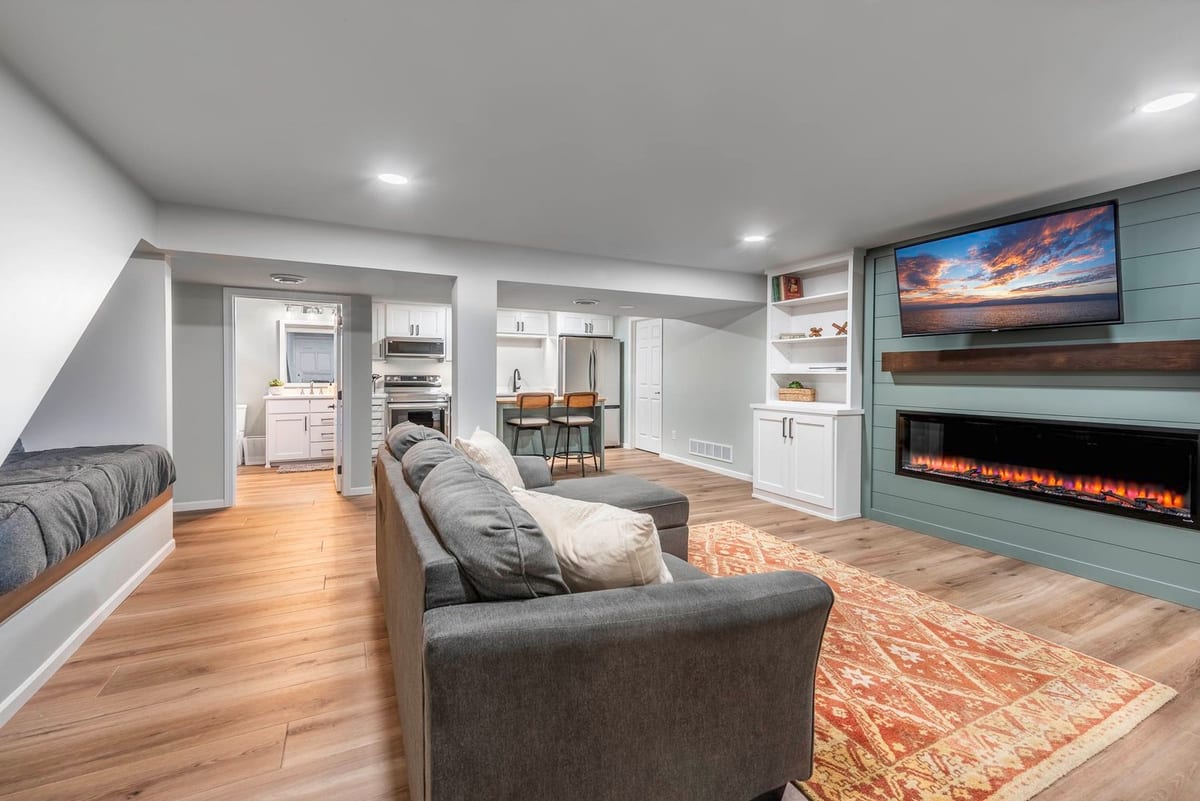
The version showing up most often combines a serious home office, a media or entertainment zone, and a wet bar or beverage station. All within the same footprint. The home office piece has evolved since 2021. It’s not an improvised corner with a folding desk. Contractors are now adding acoustic insulation as a standard line item on basement office builds, treating sound isolation as a baseline requirement rather than an upgrade.
Wet bars got upgraded too. The basic bar fridge and plywood cabinet setup is being replaced by beverage stations with ice makers, statement tile backsplash, integrated lighting, and cabinetry that matches the rest of the space.
And bathrooms are being built to main-floor quality. Tile showers, heated floors, stone countertops. If a bathroom is going in at all, it’s going in at a standard that doesn’t undercut the rest of the finish.
What It Costs to Finish a Basement in 2026
The national range is $20 to $75 per square foot, with a typical 800 to 1,200 square foot space averaging around $32,000. Most projects fall between $20,000 and $60,000.
A few things push that number up and often get underestimated upfront.
Adding a full bathroom adds $8,000 to $15,000 regardless of basement size. These costs don’t scale down much with smaller square footage. A wet bar with a plumbing connection adds another $5,000 to $12,000 depending on finish level.
Egress matters if you want a legal bedroom. You need a proper egress window with a minimum opening size per code. Adding a window well where one doesn’t exist runs $2,500 to $5,000. Some municipalities require two egress points for any finished basement used as habitable space, so check local code before you budget.
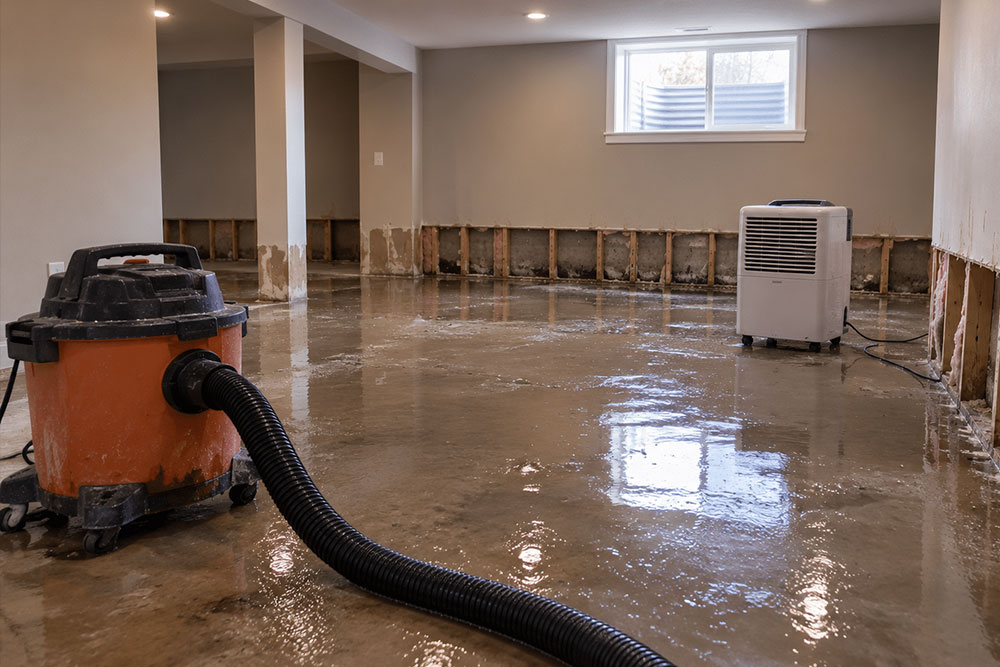
Moisture has to come first. Any active water intrusion has to be addressed before finishing begins. Interior drainage systems or exterior waterproofing can add $5,000 to $30,000 before a single stud goes up. Finishing over a wet basement creates a mold and structural problem, not an extra room.
Permits are required in virtually every jurisdiction and typically run $300 to $1,000 depending on scope.
How Finished Basement ROI Actually Works
The Cost vs. Value report puts basement remodel cost recovery at 65 to 80% nationally, with a typical figure around 71%. A $50,000 project adds roughly $35,000 in resale value on average.
The actual return depends heavily on how the space appraises. Below-grade finished space is valued at a 30 to 50% per-square-foot discount compared to above-grade living area. Walk-out basements, where there’s a grade-level exterior door or large above-grade windows, get a smaller discount of 10 to 30%. If you have a walk-out, the return on finishing it is meaningfully better.
The single best feature for improving appraised value is adding a bedroom and a full bathroom. Both show up as hard data in comparable sales. A finished rec room without a bathroom is a nice feature. A finished bedroom suite with its own bath changes the comparable count on your listing and gives buyers a reason to justify a higher number.
Homes with finished basements also sell roughly 10% faster, which matters in slower markets where days-on-market affects negotiating position and final net price.
For context on how basement ROI stacks up against other projects, the home improvements with the highest returns breaks it down across project categories.
What the Permit Data Shows About Timing
The 550-permits-per-year national figure is an average. Some markets run significantly above it. If your county is in a high-activity tier for interior renovation, expect longer booking windows and prices toward the top of the local range. The contractors worth hiring are already booked, and they’re not competing hard for your project.
Building permit activity in your county shows where your local market sits and what it means for scheduling. If you’re in a high-activity market, start contractor conversations 6 to 8 weeks earlier than you think you need to. This is especially true heading into fall, when interior work spikes and availability tightens fast.
The Harvard Joint Center for Housing Studies projects total annual homeowner improvement spending at $522 billion by year-end 2026. Growth is slowing from earlier peaks, but contractors are still busy. That affects lead times more than it affects pricing.
When a Basement Finish Isn’t Worth It
Ceiling height under 7 feet is an immediate problem. Most building codes require a minimum of 7 feet for a habitable space. Below that, the space either doesn’t qualify legally as livable area or buyers won’t value it at finished-room rates regardless of quality.
Active moisture is a non-starter. Get a waterproofing assessment before you budget anything else. No finish material survives a wet basement.
Over-improving for your neighborhood applies here as much as it does to kitchens. If comparable homes in your area sell at $350,000 and you’re considering a $60,000 basement finish, the math doesn’t hold. Appraisers and buyers both apply a ceiling based on what the neighborhood will support.
Some markets also value below-grade square footage poorly regardless of finish quality. Before committing to a large project in a market you’re not sure about, ask a local appraiser how below-grade space is treated in comparable sales.
Before You Get Quotes
Three bids minimum. The spread between basement finishing quotes is typically 20 to 30%, and the low bid is rarely the right choice.
Ask specifically about egress, permits, and moisture before scope and price come up. A contractor who skips past those questions is one who’ll hit you with change orders after demo.
If your county is running high on permit activity right now, start earlier than you think you need to. A project you want to start in September needs conversations in July.