Why Remodeling Costs More in Older Homes (2026 Data)

- Aug 29, 2026
- 8 min read
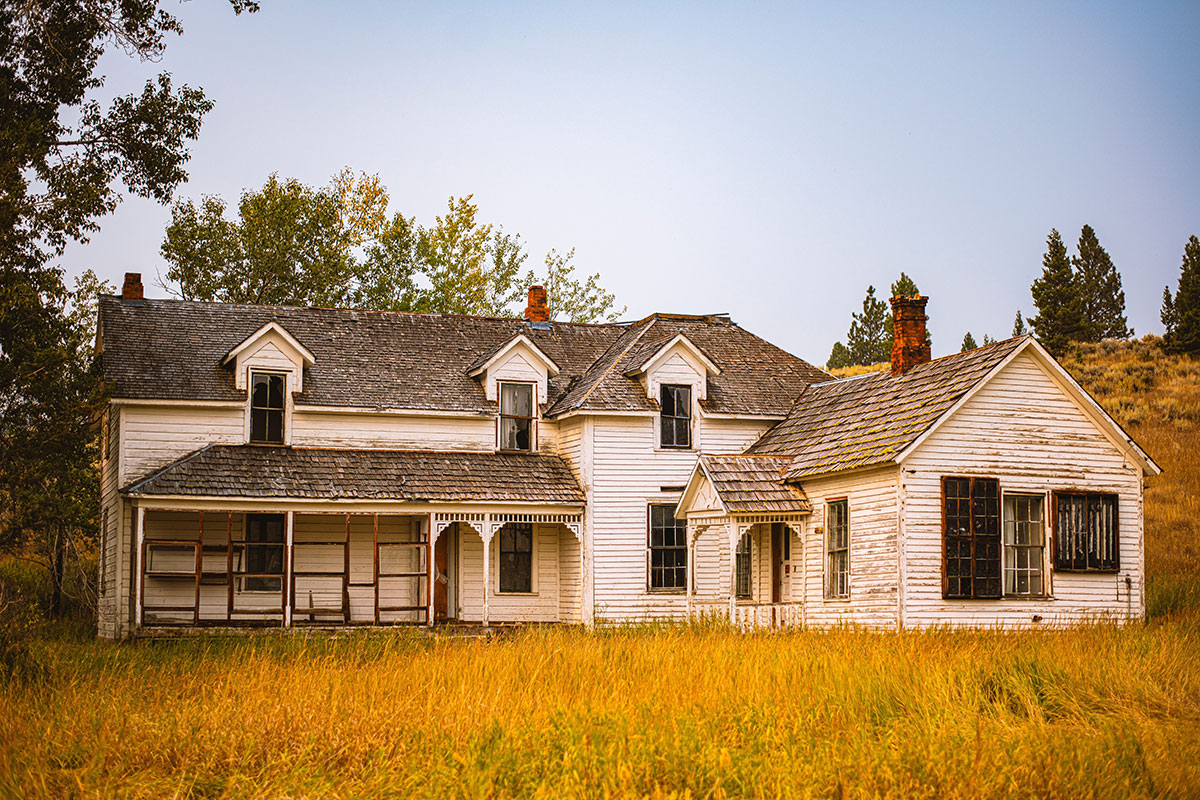
A 1954 ranch outside Buffalo and a 2006 build outside Raleigh both need the same kitchen. Same layout, same cabinet line, same appliances. The Buffalo job costs more, and the gap is wider than most homeowners expect.
Part of that is the house. Older construction hides things behind walls that nobody prices until the walls come down. But there’s a second factor almost nobody talks about, and we found it by joining two datasets that don’t usually get looked at together. We took Census housing-age data for 26,283 ZIP codes and matched it against Bureau of Labor Statistics construction wages across 393 metro areas. The places with the oldest houses are also the places where contractor labor costs the most. Those two problems arrive together, and understanding why remodeling costs more in older homes means understanding that they compound.
Half of America Lives in a Pre-1980 House
Start with how big this actually is, because the number surprised us.
Weighting every ZIP code by its population, 165.5 million Americans live in ZIP codes where most of the housing predates 1980. That’s 50.6% of the country. About 37.4 million people live in areas where the typical home went up before 1940.
So this isn’t a niche problem for people restoring Victorians. It’s the median American remodeling project. Half the country is renovating housing built before modern energy codes, before the lead paint ban, and in many cases before aluminum wiring and asbestos flooring fell out of use.
The concentrations get extreme at the ZIP level. In 63118 in St. Louis, 95.3% of housing predates 1980 and 79.9% predates 1940. Oak Park, Illinois (60304) is 95.0% and 75.5%. Buffalo’s 14213 is 91.5% and 74.4%. Philadelphia’s 19134 sits at 94.3% and 74.1%. Those are dense, fully built-out neighborhoods where finding a house that doesn’t trigger the pre-1978 rules takes real effort.
The Old-House Penalty Comes With a Second Bill
Here’s the part that doesn’t show up in any remodeling guide we could find.
Across 185 metro areas with populations above 250,000, the share of pre-1980 housing correlates with local construction wages at r = 0.563. That’s a strong relationship for anything involving geography and money. Group those metros into four bands and the pattern is clean, with no exceptions:
| Metro cohort | Housing built pre-1980 | Median construction wage |
|---|---|---|
| Oldest 25 metros | 70.3% | $65,162 |
| Next 50 | 56.8% | $60,464 |
| Next 67 | 42.9% | $55,134 |
| Newest 43 | 28.5% | $49,589 |
A $15,573 spread between the top and bottom cohorts. The wage climbs as the housing gets older, band by band. The reason is straightforward once you see it. Old housing stock means an old city, and the old cities are the dense, expensive metros of the Northeast and the industrial Midwest. New housing stock means Sun Belt sprawl, where labor has always been cheaper.
Named metros make it concrete:
| Metro | Pre-1980 housing | Construction wage |
|---|---|---|
| Buffalo-Cheektowaga, NY | 76.9% | $61,680 |
| Youngstown-Warren, OH | 75.5% | $57,730 |
| New York-Newark-Jersey City | 75.1% | $75,110 |
| Scranton-Wilkes-Barre, PA | 74.4% | $57,900 |
| Pittsburgh, PA | 72.8% | $59,830 |
| Boston-Cambridge-Newton, MA | 67.8% | $77,320 |
| San Francisco-Oakland, CA | 67.2% | $79,000 |
| Phoenix-Mesa-Chandler, AZ | 27.9% | $58,500 |
| Atlanta-Sandy Springs, GA | 26.7% | $50,720 |
| Austin-Round Rock, TX | 19.6% | $49,590 |
| Raleigh-Cary, NC | 19.6% | $49,780 |
| Myrtle Beach, SC | 16.1% | $45,840 |
Los Angeles is the one that surprised us. Nobody thinks of LA as an old-housing market, but 69.1% of its stock predates 1980, ahead of Milwaukee and Detroit, across a metro of 13.1 million people at a $69,600 median construction wage. The postwar boom that built the San Fernando Valley is now seventy years old. Same story in a lot of California, which is why lead and asbestos come up on remodels there far more than the region’s reputation suggests.
Boston homeowners are working on housing that’s 67.8% pre-1980 at the ninth-highest construction wage in the country. Myrtle Beach homeowners face 16.1% old stock at $45,840. That’s the same remodel meeting two very different sets of conditions, which is a different way of framing what we found in our ranking of US cities by remodeling cost.
What the EPA RRP Rule Actually Costs You
The clearest mechanism turning house age into money is federal, and most homeowners have never heard of it.
The EPA’s Renovation, Repair and Painting rule requires that anyone paid to disturb painted surfaces in a home built before 1978 hold lead-safe certification. Firms pay a $300 certification fee to the EPA. Individual renovators take an eight-hour course, valid for five years. Working without it risks fines up to $37,500 per violation, which is enough that legitimate contractors take it seriously.
Homeowners tend to assume the rule only applies to painters. It doesn’t. Cutting a doorway, replacing a window, opening a wall for plumbing, demolishing a kitchen, all of it disturbs painted surfaces and all of it falls under RRP in a pre-1978 house.
Two things follow, and both cost you. The certified pool is smaller than the total contractor pool in your area, so a bid you might otherwise have gotten never happens. And the required work practices add real labor to the job: plastic containment, sealed HVAC vents, HEPA vacuuming, specific cleanup verification before the crew leaves. On a kitchen that might be a day. On a whole-house project it’s more.
The rule is also a decent honesty filter. A contractor bidding a 1962 house who never mentions lead is either uncertified or planning to skip the requirement, and neither answer is one you want. It’s worth pairing with a quick check that they’re licensed in your state before you go further.
Knob-and-Tube, Asbestos, and the Rest of the Pre-1980 Tax
Lead is the regulated one. The others just show up.
Electrical is the most common budget-breaker. A kitchen with an induction range, a dishwasher, a disposal, and a microwave needs amperage that a 60 or 100 amp panel can’t supply. Panel upgrades typically run $1,400 to $2,800 before anyone touches a cabinet. If the house still has knob-and-tube or cloth-sheathed wiring, and plenty of pre-1950 stock does, rewiring the affected circuits is not optional once an inspector sees it.
Asbestos hides in more places than people expect. Nine-inch floor tile, the mastic under it, duct wrap, pipe insulation, and some siding products all used it into the late seventies. Removing asbestos siding commonly runs $700 to $1,200, and interior abatement scales with how much you disturb. The frustrating part is the timing. You find out after demo has started, when the crew stops and you’re paying for a delay.
Then there’s framing, which nobody warns you about. Older houses were built to dimensions that no longer exist. Actual two-by-fours. Plaster over lath instead of drywall, and rough openings that don’t match a single stock window size. Every window in a 1920s house can end up custom-ordered, which adds both cost and about four weeks of lead time to a project that looked simple on paper.
Every Cost Calculator Understates This, Including Ours
Worth saying plainly, since it affects how you should read any number you find online.
Cost estimates are built from local labor rates and home values. Ours are too. Run our own model against the housing-age data and the result is backwards from what you’d expect: ZIP codes where 70% or more of housing predates 1980 carry an average cost multiplier of 0.962, while ZIP codes under 30% pre-1980 carry 1.247. By that math, remodeling an old house looks cheaper.
It isn’t. The multiplier is picking up the fact that old-stock ZIPs have lower median home values ($355,072 versus $454,787), and home value is one of the inputs. What no cost model captures is building condition, because there’s no dataset for what’s behind your walls.
That gap also explains something homeowners in old-stock metros run into constantly. Bids come back both higher and further apart than the published range suggests. Contractors who work these houses every day price the risk they’ve seen before, and they price it differently from each other because they’re each guessing at what’s behind a specific wall. In a Buffalo or a Pittsburgh, three bids on the same kitchen can spread wider than three bids in Raleigh, and that spread is information rather than noise. It’s worth getting a fourth quote in an old house when you’d normally stop at three.
So every published estimate, ours included, is pricing the visible job. The lead certification premium, the panel upgrade, the abatement, the custom window order, none of that is in the number. Treat any cost range you find as a starting point that assumes nothing goes wrong, and then find out whether anything will.
What to Do Before You Get Quotes on an Old House
Four checks, none of which need a contractor, all of which change what your quotes mean.
Pull the cover off your electrical panel and read the main breaker rating. If it says 60 or 100 and you’re planning a kitchen, add a panel upgrade to your budget now instead of hearing about it in week three. While you’re there, look at the wiring insulation. Cloth or ceramic knobs means rewiring is on the table.
Pay for a lead and asbestos test before you get bids, not after demo starts. A few hundred dollars up front converts an unknown into a line item, and contractors bid a known quantity more tightly than a risk they have to pad for.
Measure one window’s rough opening. If it lands on a standard size you’re fine. If it doesn’t, every window in the house is likely custom, and you can price that before it becomes a surprise.
Then get your quotes, and read them knowing what should be in there. Any bid on a pre-1978 house that doesn’t mention lead-safe practices is incomplete, whatever the total says. That’s the same problem as any other missing scope item, and it’s worth walking through how to compare contractor quotes line by line before you sign anything.
Our housing-age figures come from the Census Bureau’s American Community Survey (table B25034, five-year estimates), and wage figures from the BLS Occupational Employment and Wage Statistics program. Metro figures are population-weighted across every ZIP code in the CBSA.